
Stabilising travel operations is becoming more challenging as booking volumes, schedule disruptions, fare changes and customer expectations rise across the global travel sector.
According to the latest EUROCONTROL Forecast 2026 to 2032, European air traffic is expected to reach nearly 11.3 million flights in 2026, reflecting continued operational pressure across airlines, suppliers, airports, and travel businesses. At the same time, IATA March 2026 Passenger Demand Data reported a 7.7% year on year increase in European passenger demand, while EUROCONTROL weekly operational reports recorded daily air traffic flow delays exceeding 31,000 minutes during multiple peak periods in 2026.
For travel agencies, tour operators, and TMCs, operational slowdowns usually begin when booking amendments, supplier delays, queue backlogs, reissues, and follow-ups start building across teams simultaneously.
This article explores when travel operations begin to slow down, how execution gaps compound across teams, and why structured business travel management is essential for maintaining long-term business travel efficiency. It also examines how dependable travel operations support and stable execution across the Amadeus travel platform help travel businesses stay operationally resilient during high-demand periods.
Why Travel Operations Slow Down During High Volume Periods
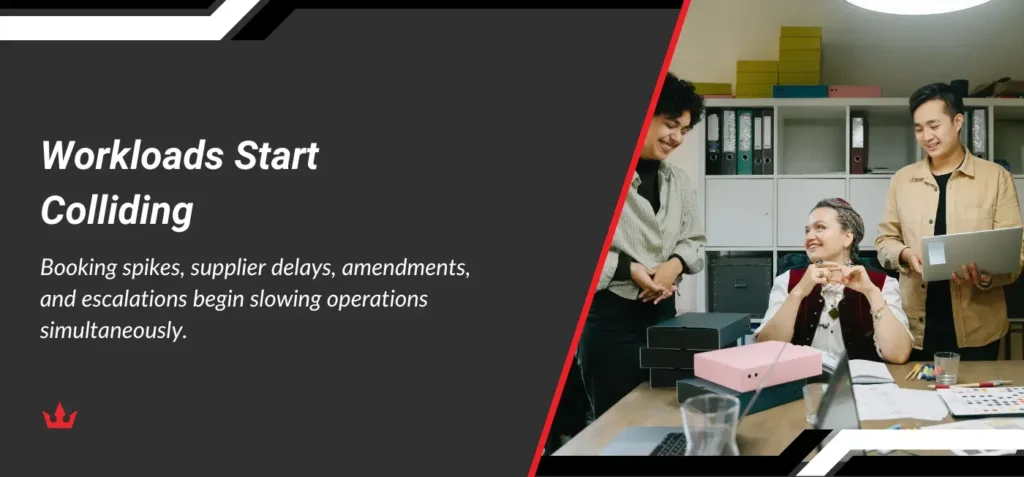
Travel operations rarely slow down due to a single major disruption. Problems usually start when several operational tasks overlap. Booking spikes, fare changes, supplier delays, ticketing requests, customer escalations, and amendments all begin piling up across teams.
During high-demand periods, teams are expected to move quickly without compromising accuracy. As queues grow, even small delays can create larger service issues later. One missed update can lead to repeated follow-ups. A delayed supplier response can hold up multiple bookings at once. Over time, teams spend more time clearing pending tasks than progressing workflows efficiently.
Common operational pressure points usually include:
- Growing booking and amendment queues
- Delayed supplier confirmations
- Teams are spending more time on follow-ups than on resolution
- Ticketing backlog pressure
- Slower response handling during peak demand
- Escalations increasing across workflows
- Service recovery becoming harder each day
This is where strong travel operations support becomes essential. Stable operations are built on consistency, workflow visibility, and controlled execution, especially when workloads become unpredictable.
The Hidden Operational Cost Of Booking Errors
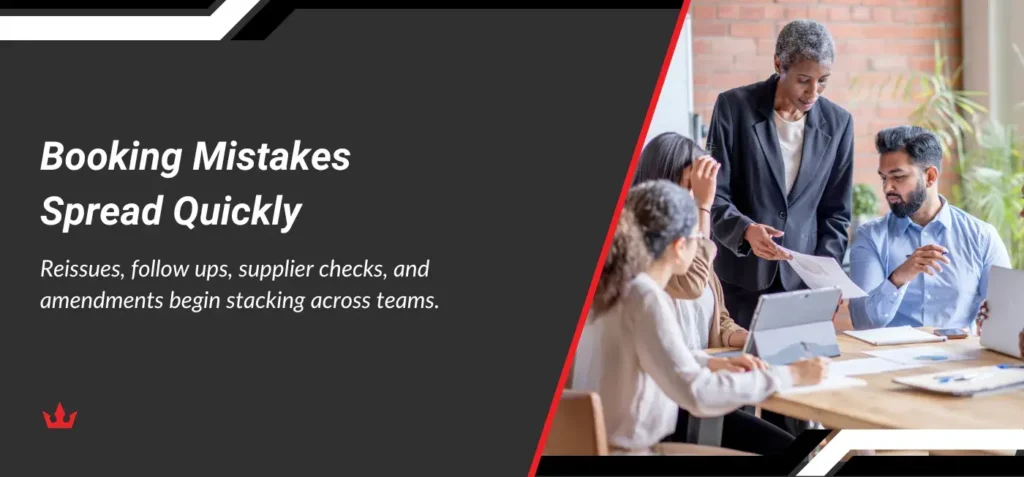
Most operational slowdowns do not begin with major failures. They usually start with one small booking mistake that creates additional workload across multiple teams.
A missed fare condition, incomplete passenger details, a delayed supplier update, or an incorrect amendment may initially seem manageable. Then the additional workload begins to spread across teams. Teams reopen bookings, contact suppliers again, update customers, reissue tickets, and clear additional queue pressure created by that single issue.
Under sustained booking demand, these small errors compound much faster. Teams begin spending more time correcting work than progressing it. That eventually affects turnaround times, customer confidence, and overall efficiency in business travel.
Common booking-related pressure points include:
- Incorrect fare conditions
- Incomplete passenger information
- Delayed ticket reissues
- Supplier reconfirmation requests
- Repeated amendment handling
- Escalations caused by missed updates
- Rework, creating additional queue pressure
Operational accuracy matters as much as speed. Strong GDS support services and stable workflow handling across the Amadeus travel platform help reduce operational friction before small booking errors become larger service disruptions.
Queue Pressure and After-Hours Gaps
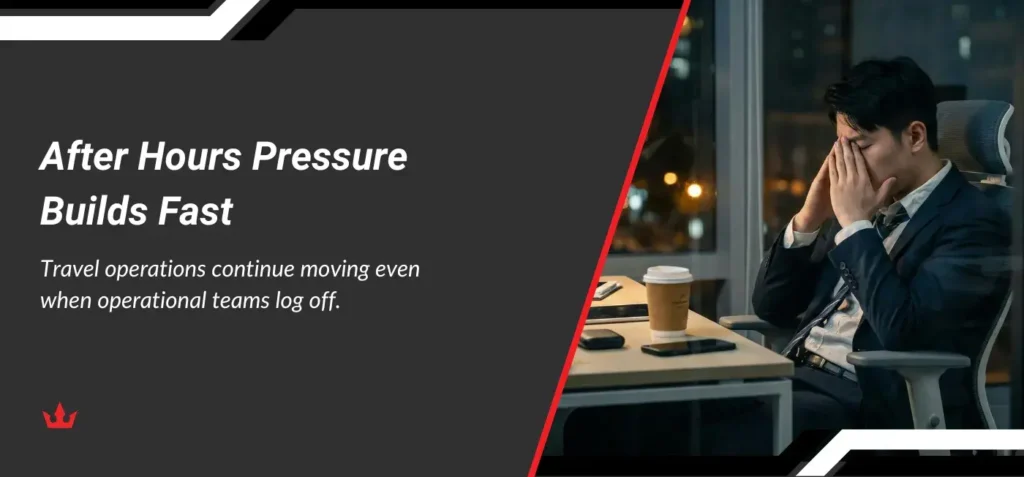
Most travel teams notice queues growing. The bigger challenge begins when bookings continue building faster than teams can clear them. Delayed supplier confirmations, pending amendments, customer follow-ups, and overnight updates quietly increase workload pressure across teams.
This becomes even harder after office hours. Travel operations do not stop when shifts end. Schedule changes, ticketing requests, cancellations, and supplier updates continue moving across different time zones. Small gaps between shifts often create larger backlogs by the next morning.
Common operational gaps usually include:
- Pending ticketing queues
- Delayed supplier responses
- Overnight booking amendments
- Unresolved customer requests
- Growing follow-up chains
- Slower queue recovery during peak periods
For travel agencies and TMCs, operational stability depends on maintaining workflow continuity before pressure starts compounding. Strong 24/7 travel assistance, structured queue handling, and dependable travel operations support help teams maintain control even during high-demand periods.
Why Workflows Break Under Peak Pressure
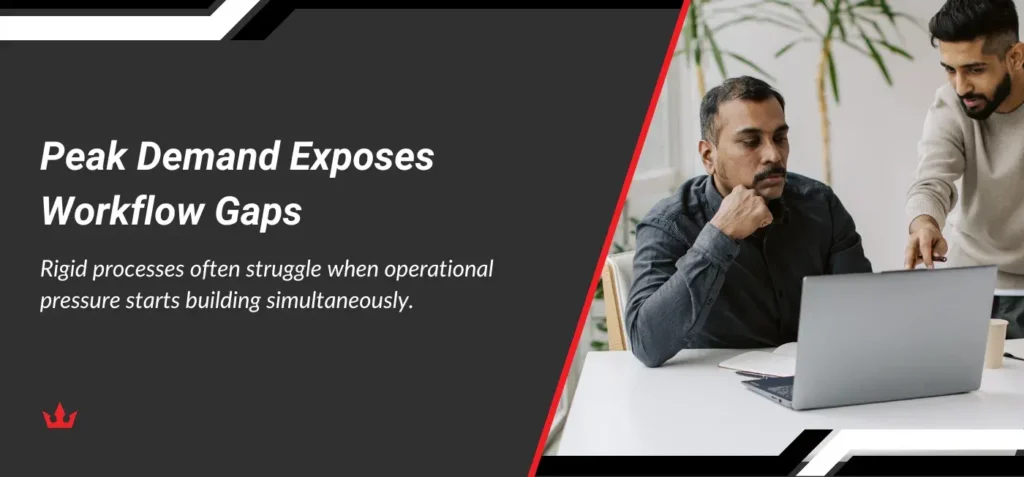
Most workflows perform well during stable periods. Problems usually begin when booking spikes, urgent amendments, supplier delays, and customer escalations start arriving simultaneously.
Under pressure, rigid processes often slow teams down instead of helping them recover faster. Approvals take longer, internal coordination increases, and teams spend more time managing movement between tasks than resolving actual operational issues. Eventually, backlogs begin affecting response times, service consistency, and customer expectations.
Operational strain during peak periods usually leads to:
- Slower approval handling
- Increased escalation management
- Delayed booking resolutions
- Repeated internal coordination
- Growing dependency on manual follow-ups
- Reduced operational flexibility
For travel businesses, operational resilience depends on how quickly teams can adapt when workloads shift unexpectedly. Strong workflow structure and reliable GDS support services help maintain operational stability without allowing pressure to disrupt service quality.
How Operational Delays Start Affecting Revenue
Operational delays do not just slow workflows. They quietly start affecting revenue much earlier than most travel businesses expect.
A delayed supplier confirmation, missed fare hold, unattended booking queue, or slow ticketing response can quickly turn into lost booking opportunities. Customers move elsewhere, fare conditions expire, and recovery becomes harder once service delays start compounding across workflows.
Revenue pressure usually begins through:
- Missed fare deadlines
- Delayed booking confirmations
- Slow amendment handling
- Supplier response bottlenecks
- Unattended customer requests
- Queue backlogs are affecting turnaround times
For travel agencies and TMCs, operations directly influence commercial performance. Strong travel expenses management practices and consistent execution help businesses protect revenue opportunities during high-demand periods.
What Stable Travel Operations Actually Require
Stable travel operations are rarely built around speed alone. They depend on consistency, workflow control, and the ability to manage pressure without allowing service quality to decline.
As booking volumes grow, travel businesses need workflows that continue moving efficiently across ticketing, supplier coordination, amendments, queue handling, and customer communication. Operational stability comes from reducing friction before it starts slowing teams down.
Strong operational foundations usually include:
- Structured booking handling
- Clear queue ownership
- Faster escalation resolution
- Consistent supplier coordination
- Reliable after-hours coverage
- Accurate workflow execution
- Better visibility across operational tasks
For travel agencies, tour operators, and TMCs, structured operational workflows play a critical role in maintaining long-term business travel efficiency. Strong operational discipline, dependable support structures, and stable workflow execution help teams remain controlled even during periods of sustained pressure.
Maintaining Control When Operational Pressure Builds
Operational slowdowns usually begin with delayed updates, growing queues, supplier bottlenecks, booking errors, and unresolved follow-ups across teams.
For travel agencies, tour operators, and TMCs, stable operations depend on consistent execution, faster workflow recovery, and dependable operational support during high-demand periods. Strong business travel solutions help teams manage disruption, growing demand, and workflow pressure without affecting service quality.
Connect with Technomine Travel Solutions to improve operational stability, reduce workflow delays, and keep operations stable during periods of peak demand.