
Travel companies are looking for ways to address sustainability issues in the workplace. According to the Business Travel News Europe (BTN) article, almost half of the UK businesses (47%) have a sustainability policy- compared with 35% of French firms, 13% of Spanish firms and 18% of German firms.
Travel is essential – opening minds, helping people build trust, and encouraging people to do business together. Travel helps clients to foster personal interactions and even build relationships in the long run. Corporate travel can even help businesses unlock new opportunities.
Companies like Responsible Travel, AndBeyond, and Kynder – among others – use sustainability as a Unique Selling Proposition (USP), focusing on the significance of local culture and local people. In 2022, travel and tourism contributed 10.9% to national GDP growth.
This month, Technomine Travel Solutions will focus on trends in sustainable business travel. Though awareness of sustainable travel is increasing, travel companies are still a long way from adopting truly eco-friendly practices on a daily basis. Keep scrolling to see how some travel companies are approaching sustainability while staying authentic.
Trends in Sustainable Travel
As more and more people recognise the need for sustainable travel, eco-tourism can sometimes face backlash due to greenwashing. Here are some travel organisations adopting interesting practices.
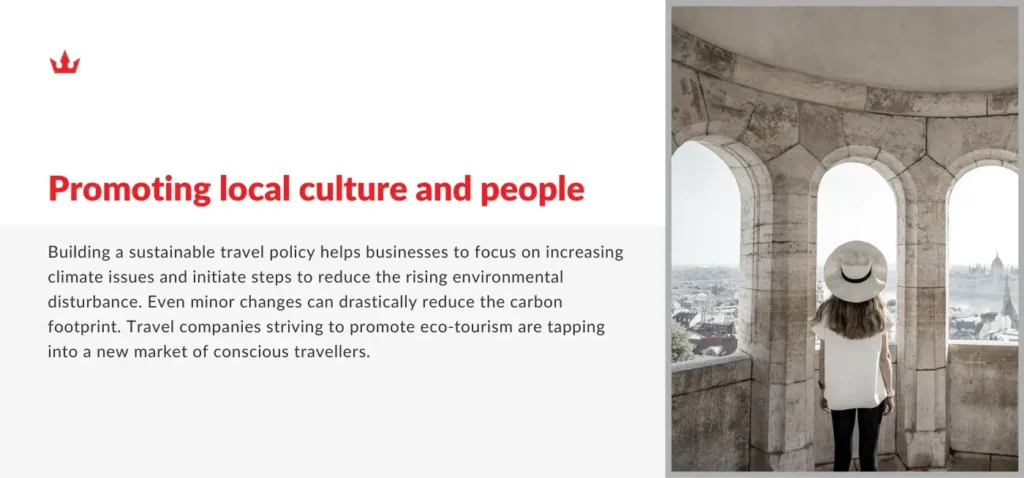
Promoting local culture and people
Responsible Travel has led the way in eco-friendly holidays and eco-tourism since 2001. This eco-friendly company has over 5,000 adventures on offer to destinations all over the world. The company focuses on promoting local culture and local people, making sure the client’s money goes to independent businesses & supporting animal conservation. You can read more about the initiative taken by Responsible Travel here.
Building a sustainable travel policy helps businesses to focus on increasing climate issues and initiate steps to reduce the rising environmental disturbance. Even minor changes can drastically reduce the carbon footprint. Travel companies striving to promote eco-tourism are tapping into a new market of conscious travellers.
Putting technology to work
AndBeyond, a luxury sustainable safari tour operator, goes beyond investing back into the local environment. The company has recently installed an electrical microgrid which decreases the need for a generator. Not only this, but AndBeyond is also looking for ways to install water bottling plants. By investing in modern technologies, travel companies can look after the land, local people, and wildlife without harming the environment.
Focusing on the business of travel
Recently, there was a great article in Travel Weekly about how travel businesses can adopt sustainable practices. Take a look at a few of these ideas.
Focus on the travel goals
Travel companies are starting to adopt climate-friendly practices
However, travel professionals also need to consider the logistical feasibility and financial viability of said sustainable practices. The following questions might help when considering building a sustainable travel policy.
- Can this practice help us control and reduce costs?
- How can we minimise risks while implementing this practice?
- How will this initiative impact staff productivity?
- How will we communicate these changes to our customers?
Transparency must be maintained
To build trust and seek customer loyalty, travel companies have to be transparent. Travel professionals can put their brand reputation at risk by greenwashing. Therefore, it is important to communicate openly when adopting a new sustainability initiative.

Make the process fun and engaging
Sustainability. Climate Action. Green Revolution.
These are today’s catchphrases that most social media users are excited about. Most travel management professionals worry that implementing a sustainability program will reduce staff productivity. However, when used strategically, relevant pledges and meaningful team challenges can lead to greater engagement and even productivity within the workplace. Not to mention that this is a great employer branding strategy as well.
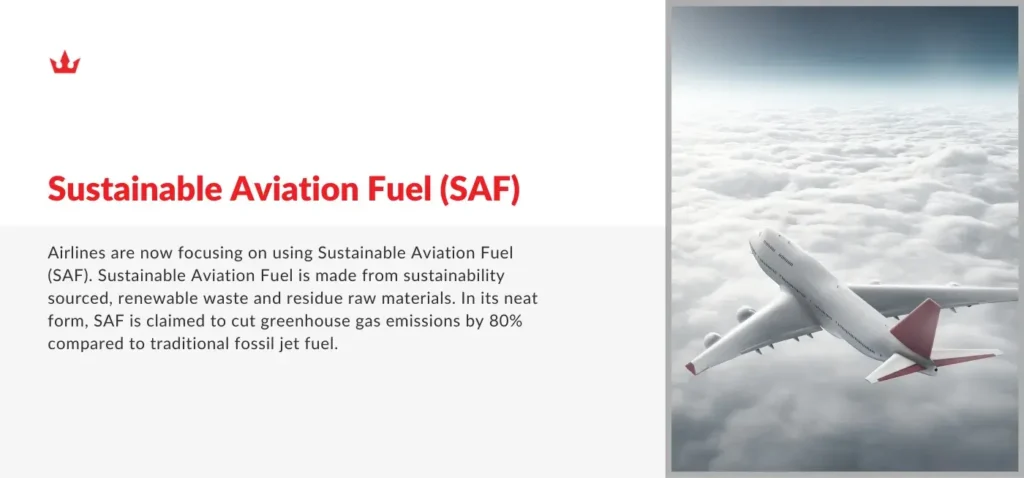
A word about Sustainable Aviation Fuel (SAF)
According to reports from the International Air Transport Association (IATA), aeroplanes account for 2.5% of the world’s total greenhouse gas emissions. Therefore, travel companies should find alternative ways to fly to promote sustainable and responsible tourism.
The good news is that airlines can now focus on using Sustainable Aviation Fuel (SAF). Sustainable Aviation Fuel is made from sustainably sourced, renewable waste and residue raw materials. In its neat form, SAF is claimed to cut greenhouse gas emissions by 80% compared to traditional fossil jet fuel. What a revelation, isn’t it!!
In 2022, Virgin Atlantic is stepping up its use of SAF by supplying 2.5 million litres to Heathrow in the first half of the year. The airline’s corporate development vice president, Holly Boyd-Boland, focuses on promoting emission-free aviation through SAF, particularly in the UK. Not only that, but British Airways and its sister airlines aim to achieve net-zero emissions by 2050.
Future Trends for Sustainable Travel
As per the statistics presented by Booking.com, 61% of travellers state that the pandemic has made them want to travel more sustainably. Moreover, 91% of the public wants brands to set an example. and demonstrate their actions to support the planet.
Even though some travel companies have started working towards sustainability goals, there is still a long way to go when making these practices a daily reality. In the coming years, we will see more attention on travel companies adopting eco-friendly practices.
Building a sustainable travel policy can offer your travel business a competitive edge in a saturated travel market. Subscribe to our blog to read more newsworthy articles from the world of travel management and virtual support.
Frequently Asked Questions About Sustainable Travel
- What is sustainable business travel?
Sustainable business travel manages the costs, social impacts and environmental consequences of using different business travel modes. Businesses can improve their commercial performance and reputation by adopting sustainable working policies and practices. - Why is sustainable travel important?
Sustainable travel is important because it aims to find a reasonable balance between responsible tourism and protecting the environment. Sustainable travel focuses on promoting a positive environment, culture and economic development. - What is a sustainable travel policy?
A sustainable travel policy focuses on building a sustainable business travel policy encompassing everything from reducing emissions to working with sustainable suppliers. - What are the principles of sustainable tourism?
Here are some of the key principles of sustainable tourism- Make optimal use of environmental resources
- Respect the socio-cultural authenticity of the host communities
- Ensure viably, long-term economic operations
- Helping to conserve natural heritage and biodiversity
- What are the 3 pillars of sustainable tourism?
Take a look at the three pillars of sustainable tourism- Environmental sustainability
- Social sustainability
- Economic sustainability