

A customer payment may appear complete, but the financial trail behind that booking can involve supplier costs, commissions, refunds, settlement records, and several payment channels. For travel finance teams, the real challenge is knowing whether every amount has reached the right account and is reflected correctly in the books.
The 2026 research paper Payment Control in Travel: Merchant Models, Credit Risk, and the Architecture of Payment Control highlights reconciliation complexity, working capital demands, settlement structures, and credit exposure as important financial considerations for travel businesses.
That makes it clear that financial administration is more than a routine accounting task. Travel agencies, tour operators, OTAs, and TMCs need visibility over money received, amounts owed, refunds, settlements, and unresolved discrepancies.
This article looks at how specialised travel finance support can strengthen reconciliation, supplier payment handling, refund accounting, settlement oversight, and financial reporting.
Keeping Travel Transactions Clear and Accountable
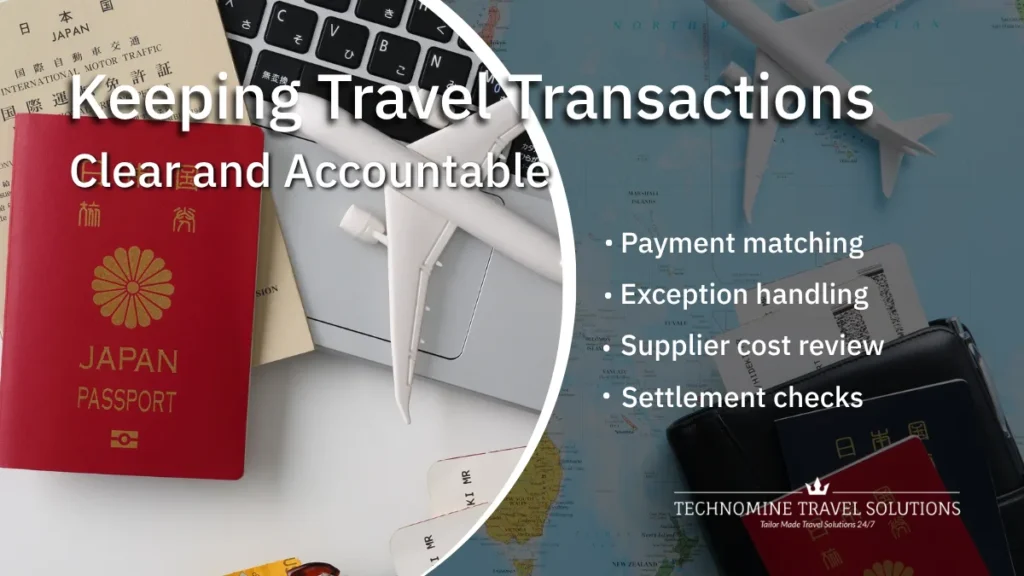
Travel businesses often receive money through one channel and pay it out through several others. Customer payments, airline settlements, supplier costs, commissions, and refunds can all sit within the same financial cycle, which makes mismatches harder to spot if records are reviewed in isolation.
The most important checks include:
- Payment matching: Customer receipts should be matched against the correct booking and financial record.
- Supplier cost review: Amounts due to airlines, hotels, and other suppliers should correspond with the agreed transaction details.
- Settlement checks: Recorded amounts should be compared with the actual funds received or paid.
- Exception handling: Unmatched or incomplete transactions should be identified early and reviewed before they carry into later reporting periods.
Effective bank reconciliation gives finance teams a clearer view of what has actually moved through the business and where further review may still be needed.
Managing Supplier Payments with Better Financial Visibility
Travel businesses often work with several suppliers across the same booking, which means payment obligations can differ by amount, due date, currency, and settlement terms. Finance teams need a clear record of what is payable, what has already been processed, and what still requires action.
Key checks include:
- Payment schedules: Due dates should be tracked so upcoming obligations are visible.
- Amount verification: Payable values should match the agreed supplier cost and booking record.
- Payment status: Completed, pending, and outstanding transactions should be clearly recorded.
- Record keeping: Supporting payment details should remain available for later reconciliation and reporting.
Well-managed supplier payments help finance teams maintain clearer oversight of outgoing funds and reduce confusion around outstanding liabilities.
Keeping Refund Accounting Clear and Traceable
Refunds can create gaps between the original booking value, the amount returned to the customer, and the final financial record. For finance teams, the key is making sure each refund is recorded against the correct transaction and reflected properly in the accounts.
Important checks include:
- Original transaction match: Link the refund to the correct booking and payment record.
- Refund value check: The amount returned should match the approved refund calculation.
- Payment channel review: The method used for the refund should be reflected correctly in the records.
- Status tracking: Pending, completed, and unresolved refunds should remain clearly identifiable.
Accurate refund reconciliation helps finance teams maintain a clearer record of returned funds and reduces the risk of unresolved balances carrying forward.
Keeping Settlement Management Under Control
Settlement activity can involve different payment cycles, processing dates, and amounts due across airlines, suppliers, and other travel partners. For finance teams, the challenge is knowing what has already been settled, what remains outstanding, and which items need further review.
Key areas include:
- Settlement tracking: Amounts due and completed should be recorded clearly.
- Timing review: Settlement dates should be checked against expected payment cycles.
- Outstanding items: Unresolved balances should remain visible until they are cleared.
- Record comparison: Settlement records should be compared with internal financial data to identify differences.
Clear settlement management gives finance teams better visibility over payment movement and helps keep outstanding financial items easier to investigate.
Turning Financial Records into Useful Business Insight
Financial reporting should do more than summarise what has already happened. Travel business owners, finance managers, and controllers need records that clearly show revenue, costs, refunds, settlements, and outstanding items so they can understand the financial position of the business.
Important reporting priorities include:
- Record consistency: Transaction data should remain aligned across the accounting records.
- Outstanding balances: Unresolved amounts should remain visible instead of disappearing into broader totals.
- Period review: Financial activity should be recorded in the correct reporting period.
- Management visibility: Reports should give decision-makers a clear view of key financial movements and exceptions.
Reliable online accounting services can support clearer reporting by helping finance teams maintain organised records that are easier to review, reconcile, and use for business decisions.
Strengthen Financial Control Across Travel Operations
Travel finance becomes harder to manage when transactions move across customers, suppliers, refunds, settlements, and internal records without a clear financial trail. The value of specialised accounting services is in bringing structure to that activity, so finance teams can see what has been received, paid, refunded, settled, or left unresolved.
For travel agencies, OTAs, TMCs, and tour operators, stronger financial administration supports cleaner records, clearer reporting, and more dependable oversight of money moving through the business. Used appropriately, online accounting can also help teams maintain organised financial information that is easier to review and reconcile.
The goal is simple: give finance teams better visibility before discrepancies become harder to trace.
Need stronger financial administration across reconciliation, settlements, refunds, supplier payments, and reporting? Connect with Technomine Travel Solutions for specialised travel accounting support built around the financial realities of your travel business.
